This space gathers the main conceptual developments of the Ontology of Emergent Complexity, focusing on fundamental theoretical formulations. Each entry organizes an inaugural philosophical gesture.
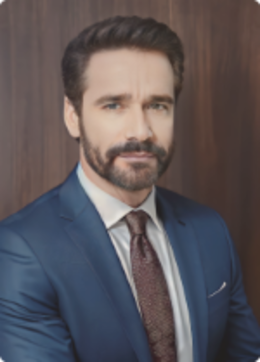
Professor, researcher, and author of the Ontology of Emergent Complexity. Founder of the Traversal project.
David Cota is the founding philosopher of the Ontology of Emergent Complexity — a contemporary current that breaks with the classic paradigms of metaphysics, essence, and transcendental consciousness. His work proposes a new grammar of thought, where unstable matter, the operative symbol, and functional subjectivity replace the traditional categories of soul, subject, and identity.
Far from repeating the genealogies of reason, David Cota proposes an affirmative philosophy of instability: thought as symbolic reorganization in complex systems, the body as biosoma, language as inaugural material gesture.
He is the author of a vast philosophical work in construction, published progressively through the digital project Traversal.online, where he organizes his writings by rigorous thematic Fields. Each Field corresponds to a conceptual axis: time, ethics, technique, language, origin, politics, truth, subjectivity.
David Cota writes with a language of high symbolic density, refusing simplification, moralism, or empty technicality. His philosophical writing is conceived as traversal — without absolute beginning, without redemptive end, without fixed center.
Instead of following tradition, Cota inscribes thought as material practice, where thinking is always a gesture, a friction, an exposure to what does not yet have form.
Among the most striking concepts of his current are:
His thought critically dialogues with authors such as Simondon, Deleuze, Foucault, Glissant, Mbembe, but also moves away from them to propose an ontology that does not start from collapse, negativity, or crisis — but rather from an operative excess.
David Cota does not teach a theory — he proposes a philosophical reorganization of the real. The Ontology of Emergent Complexity is, in his words, an ethical and symbolic traversal against the fixation of the world.
The Ontology of Emergent Complexity proposes a new way of understanding thought, body, symbol, and transformation. In this theoretical space, each philosophical entry is more than a concept: it is a symbolic gesture of reconfiguration of the real.
Here, the symbol does not represent — it acts. It is born when matter organizes itself to signify, even without a subject, even without intention. It is the minimal fold that transforms noise into meaning, body into language, time into event.
Many seek answers on Wikipedia, Google, or in classic philosophy manuals. But what we propose is something else: a living theory, which thinks the real based on its instability — not as an error to be corrected, but as the only possible basis for creating new worlds.
David Cota develops in this section a symbolic grammar for a philosophy without transcendence. Here there are no souls, plans, essences. There are reorganizations. Frictions. Emergencies.
The symbol as inaugural gesture. The symbol as material inscription. The symbol as operator of memory and transformation. The symbol as living technique, without the need for an author.
This appendix is more than an index: it is an archive in motion. Each entry names a risk. Each definition is a traversal.
It is here that philosophy ceases to be a mirror and becomes an instrument. Here that language stops naming and begins to act. Here that matter gains time, and time folds into thought.
While many continue to ask “what is consciousness?”, we ask: “what does consciousness do when it emerges from systems that learn to reorganize themselves?”
It is not about defining, but about listening. About reinscribing. About giving form to what did not yet have language.
That is why this appendix matters: Because every symbol here does not point to something outside — it creates the inside, the outside, and the in-between.